Dana Bauer · 7 September 2026
Navigating Orphan Page Clusters Through Precision Site Mapping Tools
Orphan pages exist when content sits disconnected from a site's primary navigation structure, and clusters of these pages often emerge in large websites where content creation outpaces internal linking efforts, which leaves search engines struggling to discover and index material efficiently. Precision site mapping tools address this by crawling entire domains, analyzing link graphs, and highlighting disconnected sections that traditional sitemaps overlook, while data from various web analytics platforms shows that sites with unresolved orphan clusters experience reduced crawl efficiency and lower visibility in search results over time.
Understanding Orphan Page Formation in Modern Websites
Website growth frequently produces orphan pages because new content gets published without corresponding links from established sections, and this pattern repeats across e-commerce platforms, news sites, and corporate blogs where rapid updates create isolated nodes in the site architecture. Researchers studying web graphs note that such clusters form most commonly in subdirectories added during site expansions, whereas established pages maintain strong internal connections that facilitate discovery, yet isolated groups remain invisible to standard crawling processes until specialized mapping intervenes.
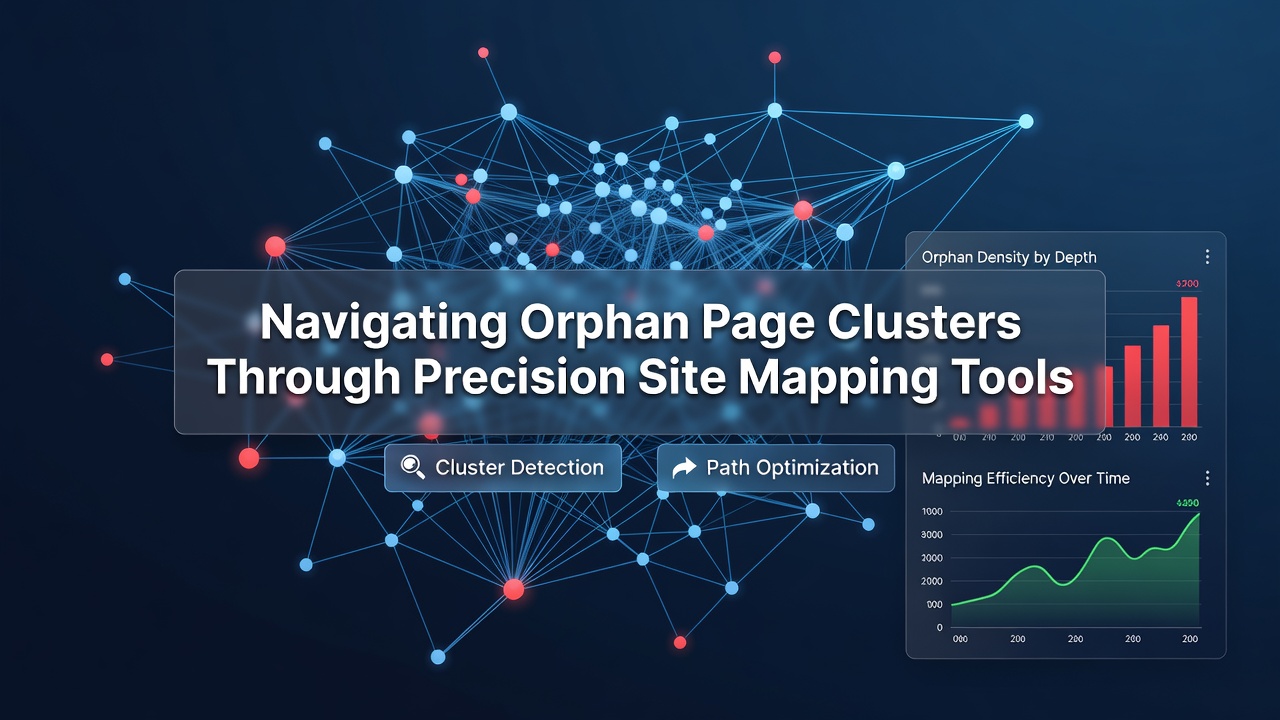
Those analyzing large-scale web data find that orphan clusters can span dozens or hundreds of URLs when content management systems allow bulk uploads without automatic link integration, and the result is a fragmented structure that wastes crawl budget on repeated attempts to reach unreachable pages. Precision tools counter this by generating visual and data-driven representations of the entire link ecosystem, allowing teams to identify patterns in how these clusters develop across different site types and time periods.
Core Functions of Precision Site Mapping Tools
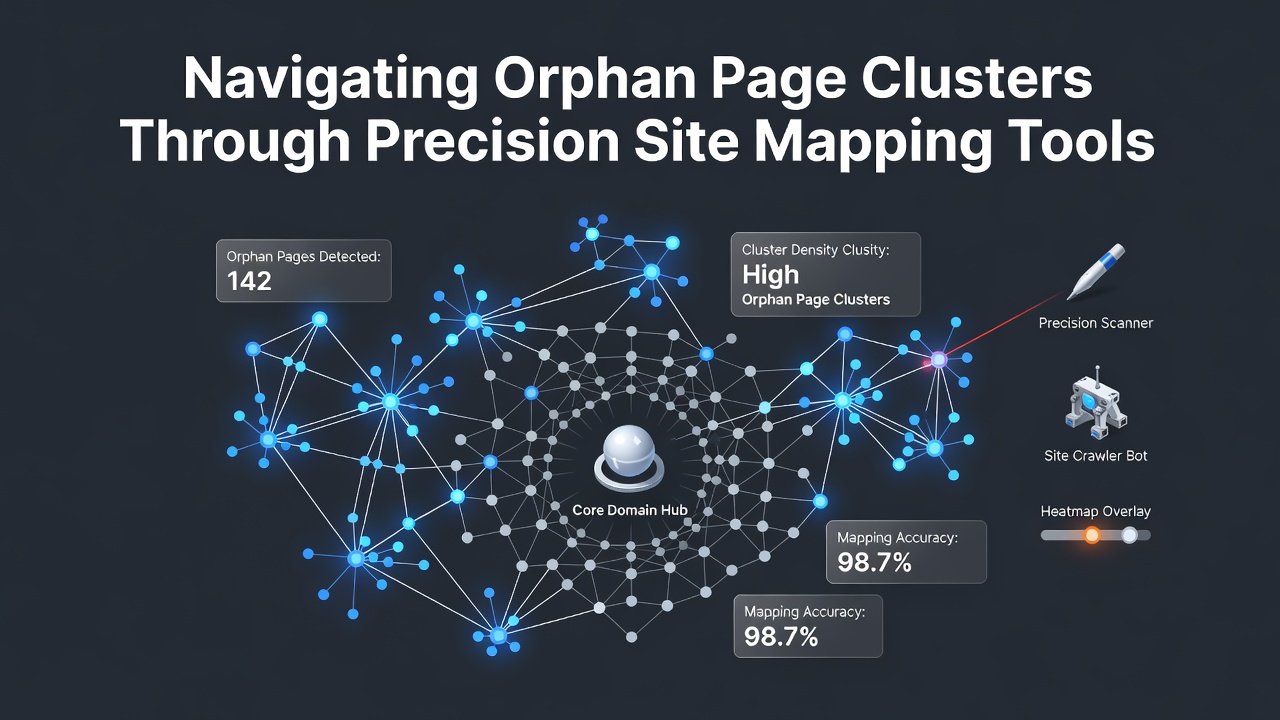
These tools operate by deploying advanced crawlers that record every internal link, external reference, and URL status in comprehensive reports, while simultaneously mapping relationships between pages to reveal clusters that lack incoming connections from the main site hierarchy. Data shows that combining crawl logs with sitemap submissions improves detection rates, and the process reveals not only isolated pages but also near-orphan groups with minimal linking that still face indexing challenges.
Advanced features include heatmaps of link density, automated cluster grouping based on directory structures, and exportable datasets that integrate with analytics platforms, whereas basic sitemap generators stop at listing URLs without relationship analysis. Observers note that regular use of these precision instruments helps maintain site health during periods of frequent content addition, particularly when September 2026 updates to crawling algorithms place greater emphasis on internal connectivity signals for ranking purposes.
Practical Identification and Remediation Steps
Teams begin by running full-domain crawls that compare discovered URLs against those present in XML sitemaps and navigation menus, which quickly surfaces orphan clusters for review. Once identified, the process involves creating targeted internal links from high-authority pages, updating category structures, or incorporating orphaned content into existing topic hubs that already receive regular crawler attention, and studies of site performance before and after such interventions indicate measurable improvements in indexing speed and traffic distribution.
Additional techniques include monitoring server logs for crawler behavior around suspected orphan areas, cross-referencing with third-party indexation tools, and establishing ongoing alert systems that flag new pages lacking sufficient inbound links within defined timeframes. Experts have observed that organizations applying these methods consistently report fewer instances of content remaining undiscovered, especially when mapping tools feed directly into content workflow systems that enforce linking requirements at publication time.
Integration With Broader SEO and Technical Workflows
Precision site mapping fits into larger technical processes by supplying structured data that informs decisions about site architecture changes, content pruning, and crawl budget allocation across complex domains. Reports generated from these tools often integrate with platforms used by search engine optimization teams, creating feedback loops where identified issues trigger specific remediation tasks tracked over multiple crawl cycles.
According to documentation from the World Wide Web Consortium, structured approaches to site connectivity support better resource discovery overall, while a separate analysis from Canadian digital government guidelines highlights how systematic mapping reduces barriers to information access on public-facing websites. The combination of these mapping capabilities with regular audits creates resilient site structures that adapt to evolving content volumes without accumulating disconnected clusters.
Conclusion
Precision site mapping tools provide structured methods for locating and addressing orphan page clusters through detailed crawl analysis and relationship mapping, delivering measurable benefits in crawl efficiency and content discoverability when applied consistently across growing websites. Organizations that incorporate these instruments into routine technical reviews maintain clearer site architectures that support ongoing indexing and visibility objectives.